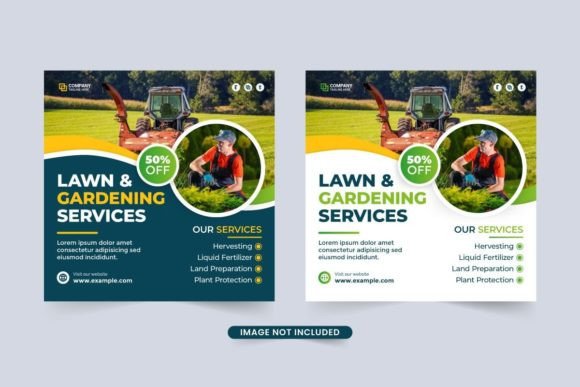
Understanding Lawn and Gardening Service Flyer Design for Effective Local Marketing
In the competitive landscape of outdoor maintenance, visual communication serves as the primary bridge between a service provider and potential clients. Lawn and Gardening Service Flyer Design represents more than just a simple printed handout; it is a strategic marketing tool that combines horticultural aesthetics with commercial messaging. For professionals in the agro farm sector, landscaping businesses, or independent gardeners, the quality of this design directly influences perceived reliability and expertise. Unlike generic advertising templates, effective designs in this niche must balance the organic nature of gardening with the structured needs of a business advertisement.
When evaluating different approaches to promoting these services, it becomes clear that the medium dictates the message. A well-crafted flyer design acts as a tangible representation of the care a gardener provides to a property. It suggests attention to detail, precision in mowing, and an eye for color and texture. This visual cue is often the first impression a homeowner receives before ever seeing the actual work performed. Consequently, understanding the nuances of creating or selecting the right design is essential for anyone looking to establish a foothold in the local market.
Distinguishing Features of Specialized Garden Flyers
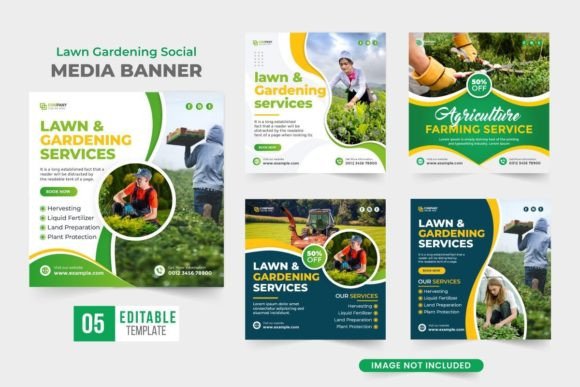
The distinction between a standard business flyer and one tailored for lawn and gardening service flyer design lies in the specific imagery and functional requirements. While a general service flyer might rely on stock photos of smiling people, a specialized design prioritizes high-quality vector illustrations or photography of manicured lawns, blooming flower beds, and professional equipment. The visual language must convey freshness, growth, and order.
These designs often incorporate specific elements such as seasonal motifs, which change based on the time of year. For instance, a spring flyer might emphasize planting and bulb care, while a summer version focuses on mowing frequency and weed control. The typography used also plays a critical role; fonts should be legible yet evoke a natural feel, avoiding overly rigid corporate styles that clash with the subject matter. Furthermore, the layout must accommodate essential information like service areas, contact details, and a clear list of offerings without appearing cluttered.
Another defining characteristic is the versatility required for modern distribution. Today's lawn and gardening service flyer design is rarely static. It must function effectively as a digital asset for social media posts, a printable document for community boards, and a scalable image for vehicle wraps or banners. This multi-platform requirement demands that the underlying file structure be robust, typically utilizing vector formats that allow for resizing without loss of quality. Whether the output is a small 300 DPI print piece or a large-format banner, the core design must remain crisp and professional.
Comparing Digital Assets vs. Custom Professional Services
When choosing how to acquire a design for your business, there are two primary paths: purchasing pre-made digital files or hiring a custom graphic designer. Each option presents distinct advantages and tradeoffs regarding cost, customization, and speed.
Purchasing ready-to-use digital assets, often available in formats like AI, EPS, PDF, and high-resolution vectors, offers significant flexibility. These files are designed to work seamlessly within various design applications, including Cricut Design Space and other cutting machine software. For entrepreneurs who need immediate solutions or wish to create their own variations, these assets provide a strong foundation. They are compressed into convenient ZIP files, making extraction and management straightforward using standard tools like WinRAR or WinZip. The ability to modify colors, swap text, and rearrange elements allows business owners to tailor a generic template to their specific brand identity without incurring the high costs of a full-service agency.
However, this approach requires a baseline level of design proficiency. The user must be comfortable navigating design software to ensure the final output meets professional standards. In contrast, hiring a custom designer guarantees a unique product but comes with higher financial barriers and longer turnaround times. Custom designs are built from scratch to match exact specifications, ensuring no other competitor has the same look. Yet, for many small-scale operations or new startups, the investment may not be immediately justifiable.
Another consideration is the intended use of the design. If the goal is to produce physical items like vinyl decals, iron-on transfers for clothing, or engraved signs, the source file format becomes paramount. Pre-made digital clip art files are specifically optimized for these applications. They support various uses ranging from scrapbooking and card invitation design to large-scale printable decorations. This versatility makes them an attractive alternative to commissioning a single-use print job. Conversely, if the business only needs a static PDF for email distribution, a custom design might offer better integration with existing branding guidelines.
Evaluating Fit and Tradeoffs for Different Business Models
Selecting the right approach depends heavily on the specific stage of the business and its operational goals. For established landscaping companies with dedicated marketing teams, a fully custom strategy might be the best fit. They require cohesive branding across all channels, and the budget supports ongoing design development. However, for seasonal workers, hobbyists transitioning to professionals, or those testing a new service area, the agility of digital assets is invaluable.
Lawn and Gardening Service Flyer Design templates offer a low-risk entry point. They allow users to experiment with different layouts and messages without committing to a permanent design. This is particularly useful during the initial phases of a business when the target audience is still being defined. A business owner can quickly produce flyers for a "Welcome" campaign, promotional discounts, or seasonal cleanup specials. If the design resonates with customers, they can later invest in a custom overhaul. If not, the loss is minimal compared to the sunk cost of a custom project.
There are limitations to consider, however. Overused templates can sometimes result in a lack of differentiation. If multiple competitors in the same neighborhood purchase the same design pack, the uniqueness of the brand is diluted. Additionally, relying solely on pre-made assets means the design may not perfectly align with the specific nuances of the local market or the unique selling propositions of the service provider. For example, a farm specializing in organic, chemical-free practices might find that a generic, bright-colored flyer does not accurately reflect their eco-friendly values.
In such cases, the decision factors shift toward customization. Even when starting with a digital file, significant modifications may be necessary to ensure authenticity. This could involve changing the color palette to earth tones, replacing generic vector images with photos of the actual team, or adjusting the copy to highlight specific certifications or local experience. The key is to view the purchased design not as a finished product, but as a flexible framework that requires personalization to be truly effective.
Practical Applications and Strategic Implementation
The utility of these designs extends far beyond traditional paper distribution. In the digital age, a lawn and gardening service flyer design serves as a versatile content hub. The same vector graphics that form the background of a printed flyer can be repurposed for social media posts, website banners, and email newsletters. This consistency reinforces brand recognition and ensures that the visual message remains uniform across all touchpoints.
For businesses engaging in direct sales through cut machines, the availability of AI and EPS files is crucial. These formats enable the creation of durable vinyl decals for lawn signs, stickers for service vehicles, and even personalized merchandise like t-shirts or aprons for staff. The high resolution (300 DPI) ensures that when these items are produced, the text remains sharp and the images do not pixelate, maintaining a professional appearance even at close range.
Furthermore, the adaptability of these files supports diverse marketing campaigns. A business might use one variation for a "Spring Clean-Up" promotion, another for "Holiday Decorations," and a third for "Year-Round Maintenance." By having a library of editable assets, service providers can respond rapidly to market trends and seasonal demands. This agility is often the difference between capturing a customer's attention and being overlooked in a crowded marketplace.
Ultimately, the choice between buying digital assets and commissioning custom work is not binary. Many successful businesses adopt a hybrid model, using high-quality templates as a base while investing in selective customizations to enhance their unique identity. Whether the focus is on lawn mowing and landscaping business advertisement banner template illustration or detailed gardening and lawn cleaning service flyer design, the goal remains the same: to communicate value clearly and professionally. By understanding the strengths and limitations of each approach, service providers can make informed decisions that align with their budget, timeline, and long-term growth strategies.